Welcome: Xinhua YCB Ceramics and Electronics CO.,Ltd.
Language:
 ∷
∷

∷
∷




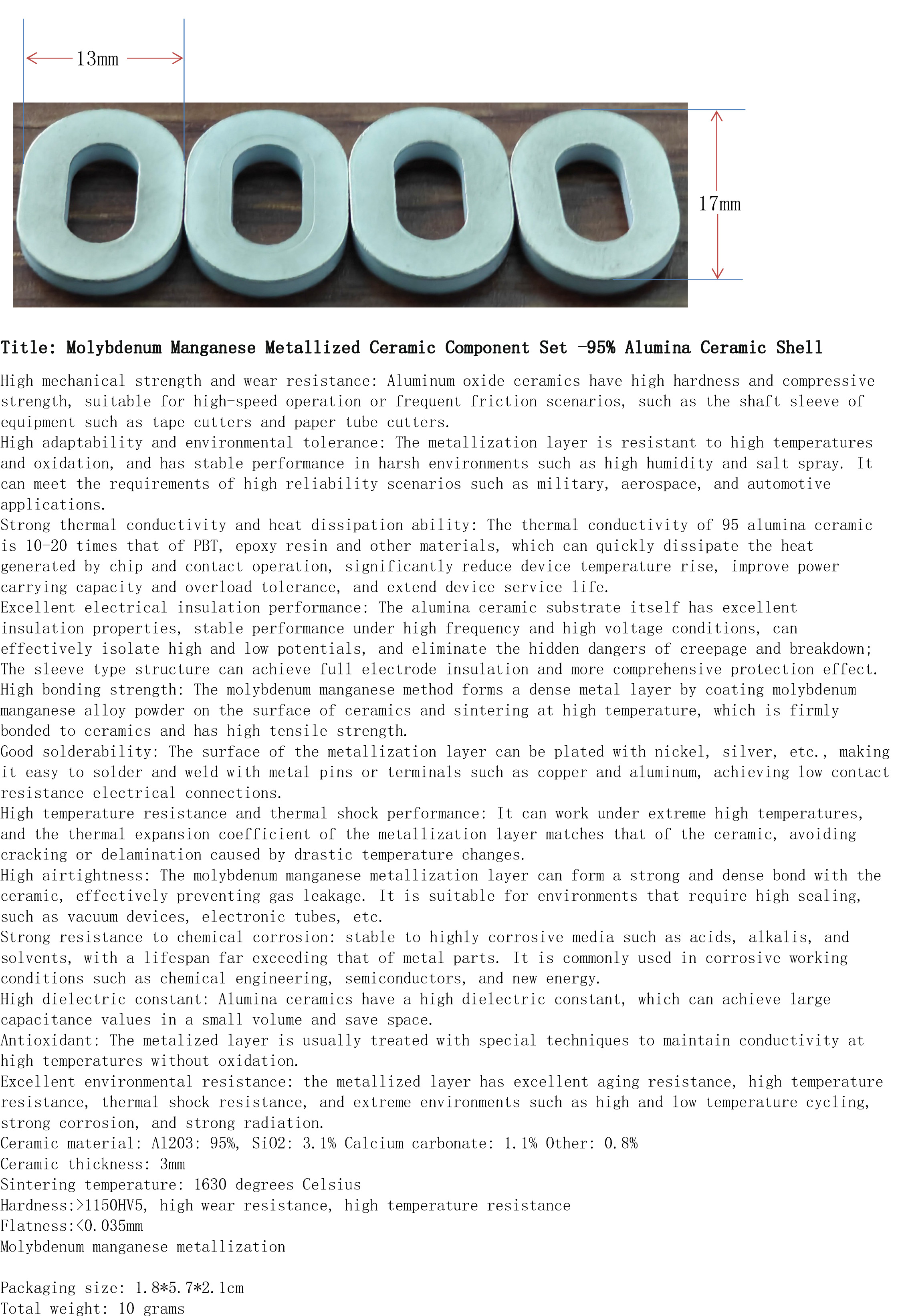
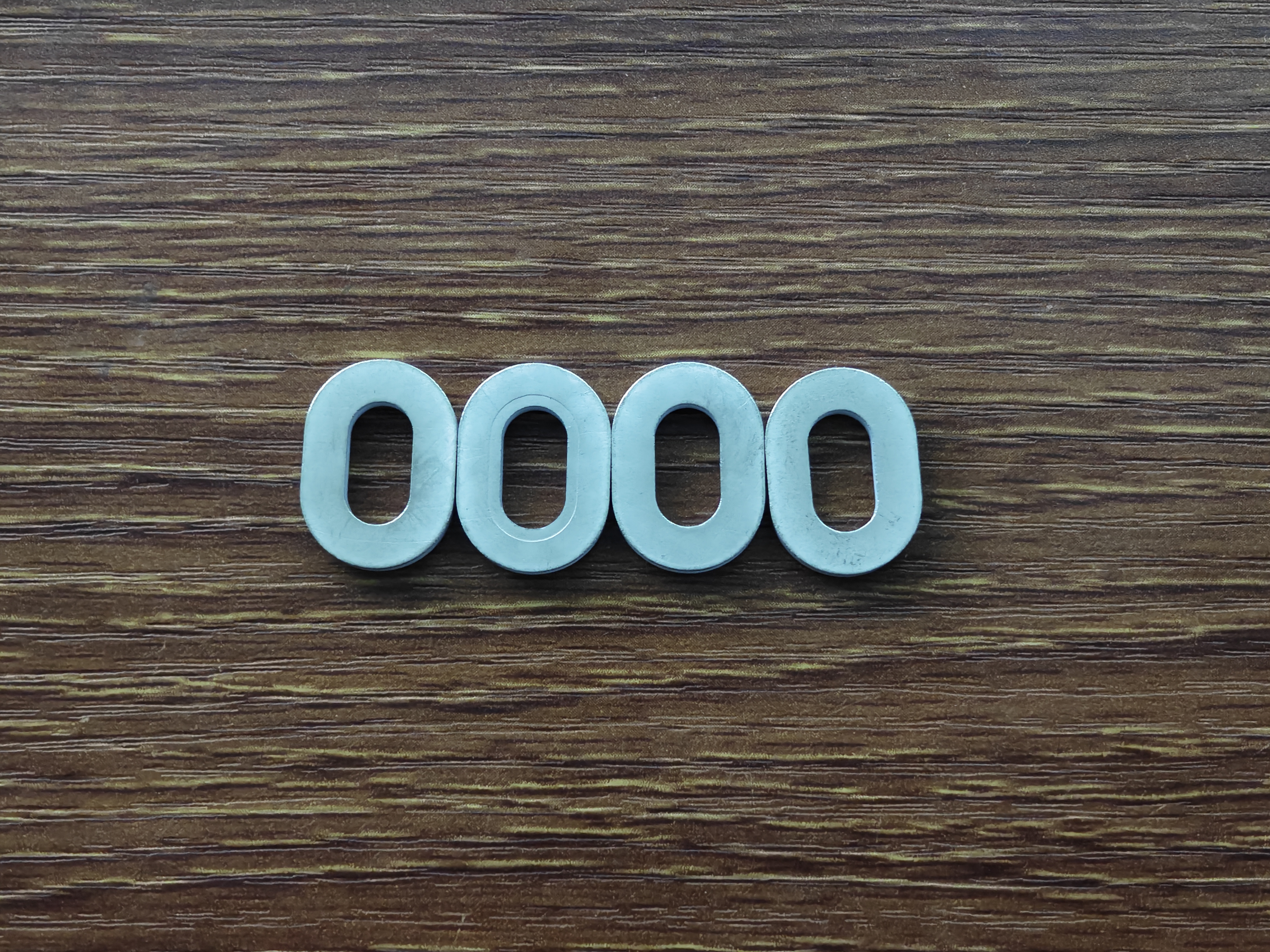
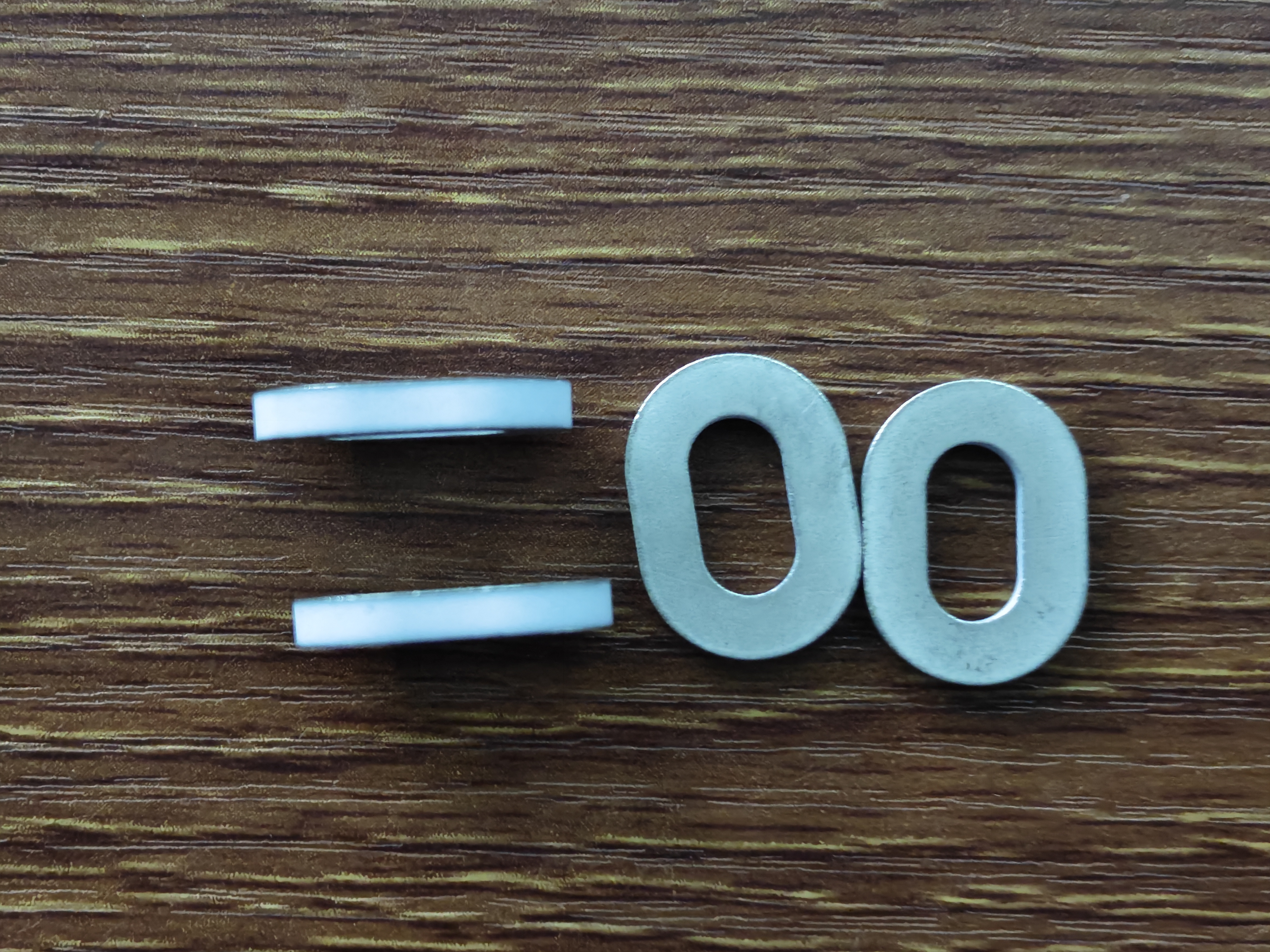
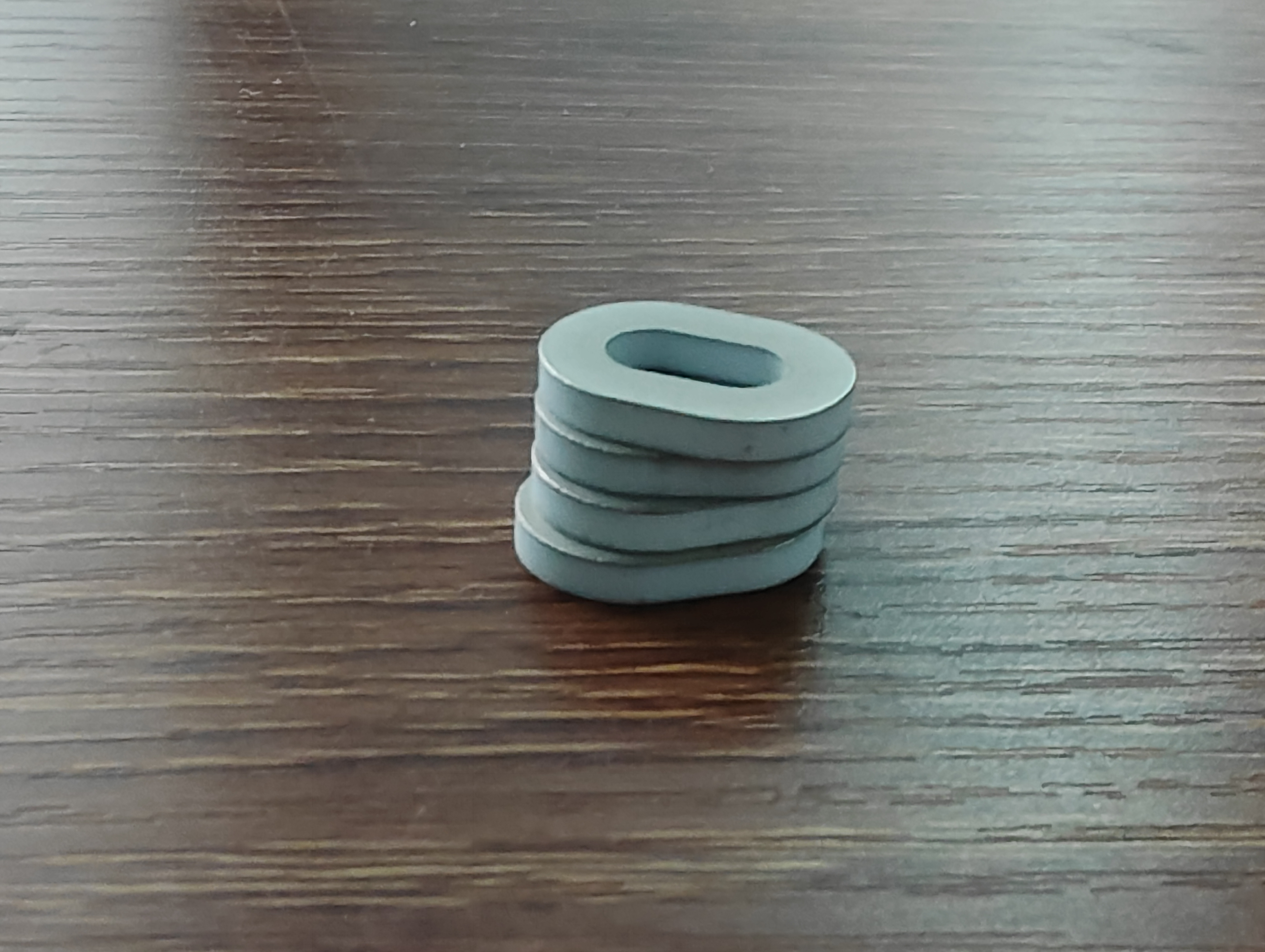
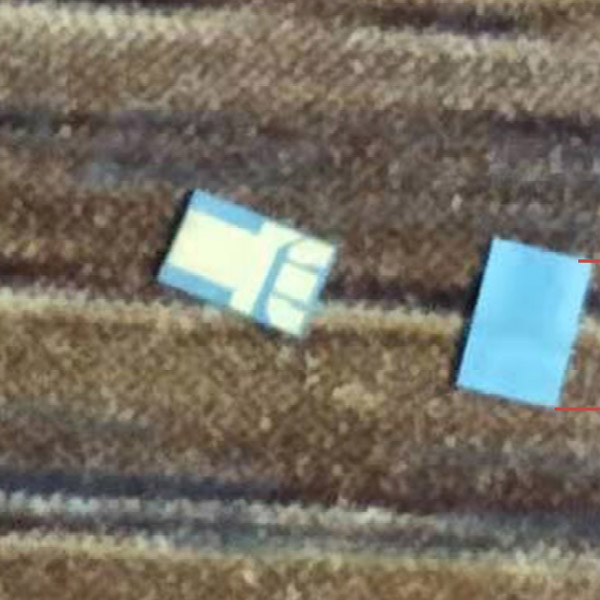
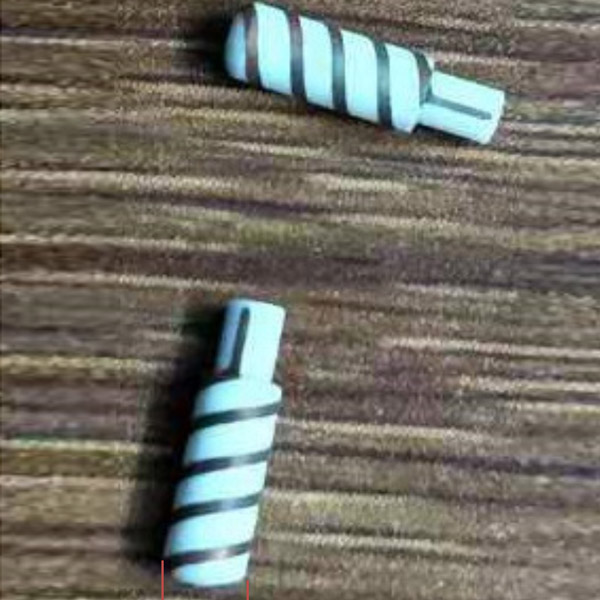
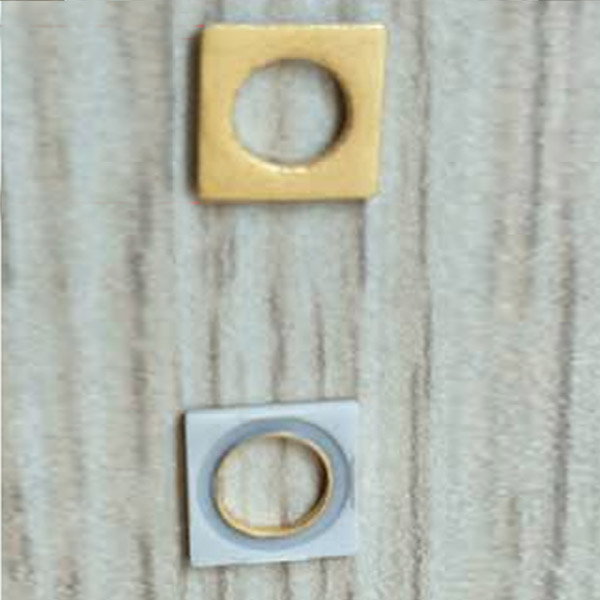
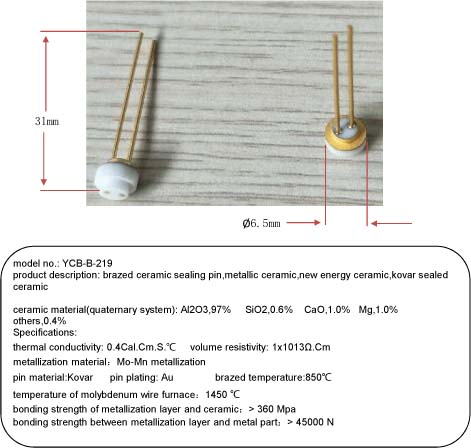
Product Name: Molybdenum Manganese Metallized Ceramic Component Set -95% Alumina Ceramic Shell
Ceramic material: Al203: 95%, SiO2: 3.1% Calcium carbonate: 1.1% Other: 0.8%
Sintering temperature: 1630 degrees Celsius
Hardness:>1150HV5, high wear resistance, high temperature resistance
Flatness:<0.035mm
Thermal conductivity: 0.4Cal. Cm. S ° C
Volume resistivity: 10130 cm
Molybdenum manganese metallization
Product model: YCB-TC-BY 20260118022
Size: 3mm high
Ceramic disc thickness: 3mm
Packaging size: 1.8*5.7*2.1cm
Total weight: 10 grams
High mechanical strength and wear resistance: Aluminum oxide ceramics have high hardness and compressive strength, suitable for high-speed operation or frequent friction scenarios, such as the shaft sleeve of equipment such as tape cutters and paper tube cutters.
High adaptability and environmental tolerance: The metallization layer is resistant to high temperatures and oxidation, and has stable performance in harsh environments such as high humidity and salt spray. It can meet the requirements of high reliability scenarios such as military, aerospace, and automotive applications.
Strong thermal conductivity and heat dissipation ability: The thermal conductivity of 95 alumina ceramic is 10-20 times that of PBT, epoxy resin and other materials, which can quickly dissipate the heat generated by chip and contact operation, significantly reduce device temperature rise, improve power carrying capacity and overload tolerance, and extend device service life.
Excellent electrical insulation performance: The alumina ceramic substrate itself has excellent insulation properties, stable performance under high frequency and high voltage conditions, can effectively isolate high and low potentials, and eliminate the hidden dangers of creepage and breakdown;The sleeve type structure can achieve full electrode insulation and more comprehensive protection effect.
High bonding strength: The molybdenum manganese method forms a dense metal layer by coating molybdenum
manganese alloy powder on the surface of ceramics and sintering at high temperature, which is firmly bonded to ceramics and has high tensile strength.
Good solderability: The surface of the metallization layer can be plated with nickel, silver, etc., making it easy to solder and weld with metal pins or terminals such as copper and aluminum, achieving low contact resistance electrical connections.
High temperature resistance and thermal shock performance: It can work under extreme high temperatures, and the thermal expansion coefficient of the metallization layer matches that of the ceramic, avoiding cracking or delamination caused by drastic temperature changes.
High airtightness: The molybdenum manganese metallization layer can form a strong and dense bond with the ceramic, effectively preventing gas leakage. It is suitable for environments that require high sealing,such as vacuum devices, electronic tubes, etc.
Strong resistance to chemical corrosion: stable to highly corrosive media such as acids, alkalis, and solvents, with a lifespan far exceeding that of metal parts. It is commonly used in corrosive working conditions such as chemical engineering, semiconductors, and new energy.
High dielectric constant: Alumina ceramics have a high dielectric constant, which can achieve large capacitance values in a small volume and save space.
Antioxidant: The metalized layer is usually treated with special techniques to maintain conductivity at high temperatures without oxidation.
Excellent environmental resistance: the metallized layer has excellent aging resistance, high temperature resistance,thermal shock resistance, and extreme environments such as high and low temperature cycling, strong corrosion, and strong radiation.
Contact: Mr. Yi
Phone: 86-15607385226
Tel: 86-0738-6656829
Email: davidyikchung@hotmail.com
Add: Shuxin Park, Huaxin District, Shangmei Town, Xinhua County, Hunan Province, China